Due Oct 21
Rocky Worlds and Smaller Objects
Physical properties of the inner planets. Asteroids (the discovery of Ceres), Kuiper Belt and Oort Cloud. Nineteenth century lunar photography.
Astronomy Reading
Openstax Astronomy (pdf | online), Chapters 7-10.
Fieldwork
Galileo’s Moons preliminary: details in the assignment posted at right.
Arts Assignment: Lunar Photography
Examine the two following groups of photographs. Writing prompt at bottom.
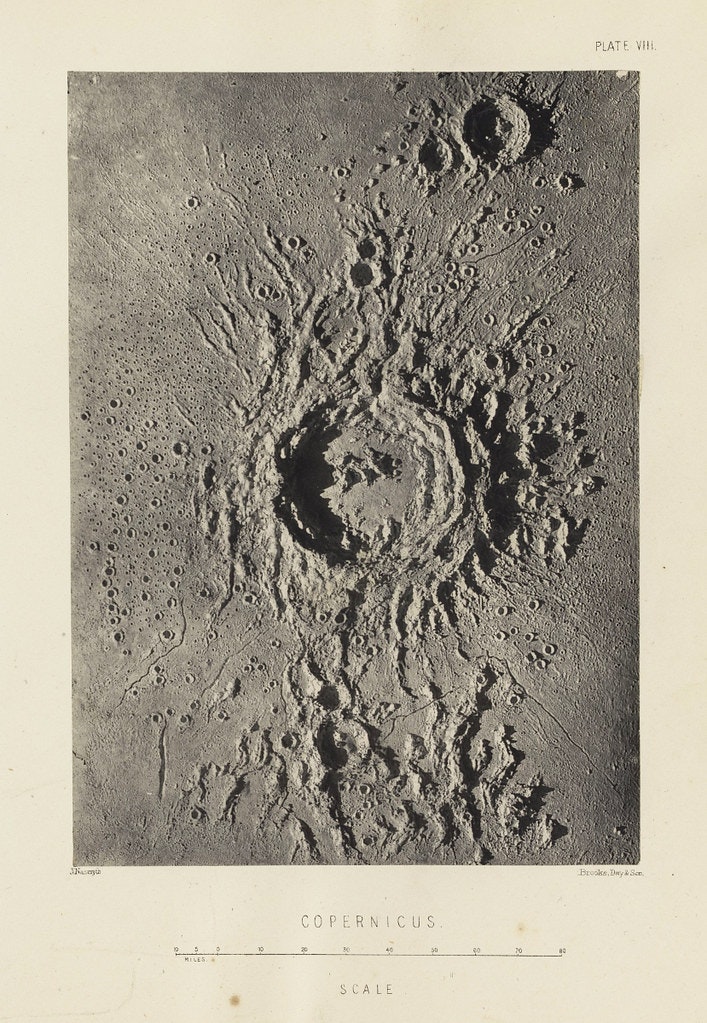
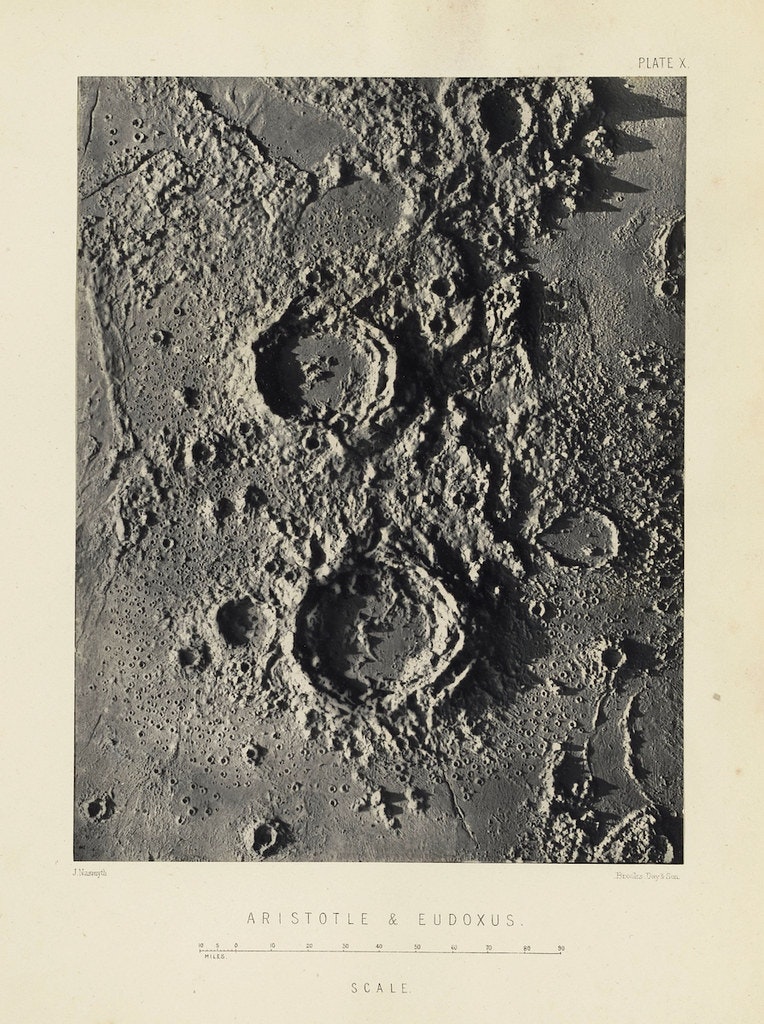
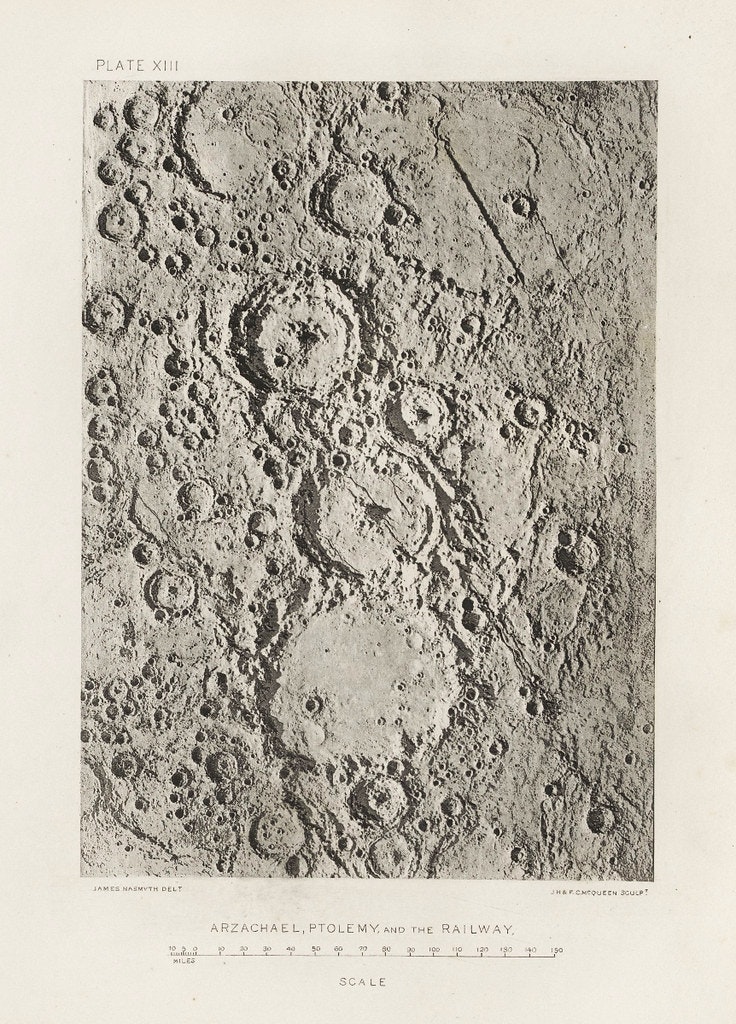
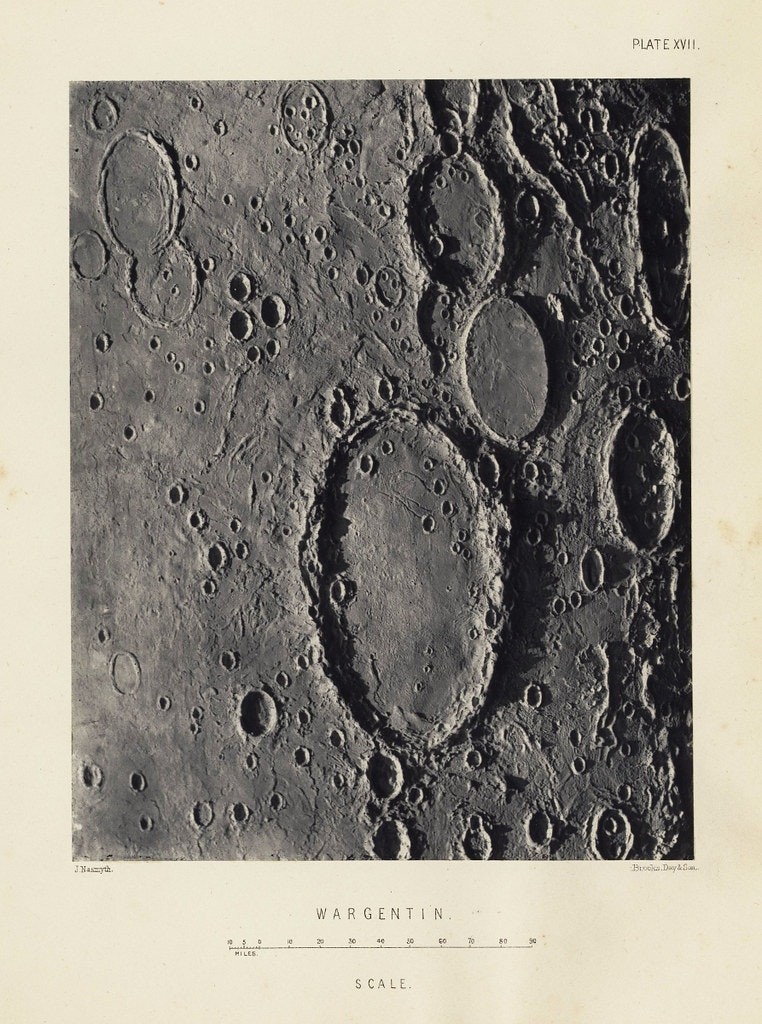
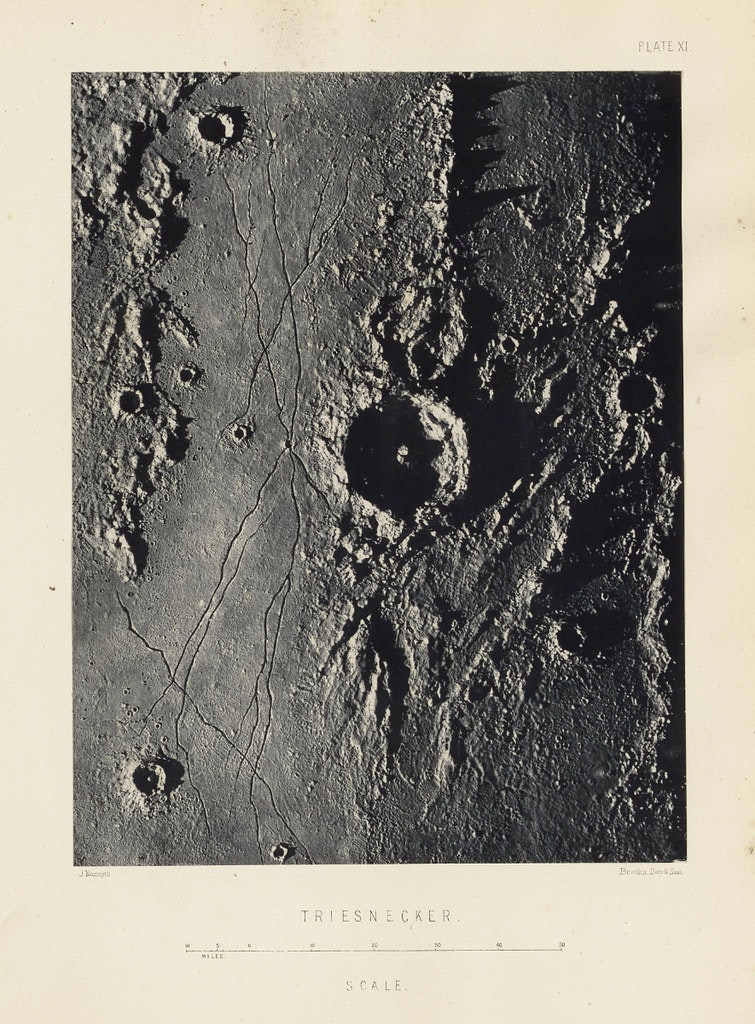
The first group dates to the 1860s and early 1870s, from a book published in 1874 by John Naysmith and James Carpenter, The Moon: Considered as a Planet, a World, and a Satellite.
-
- Copernicus Crater
-
- Aristotle & Eudoxus
-
- Arzachael Crater
-
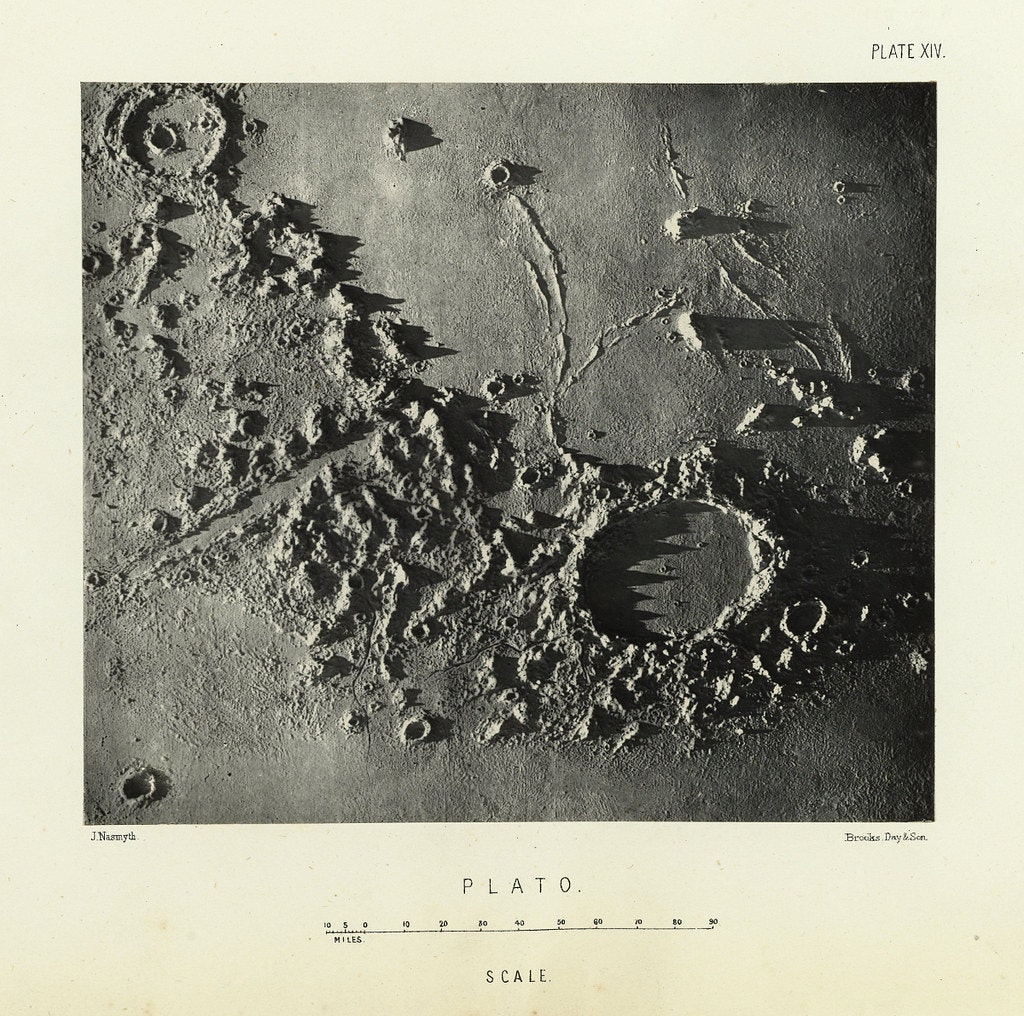
- Plato Crater
-
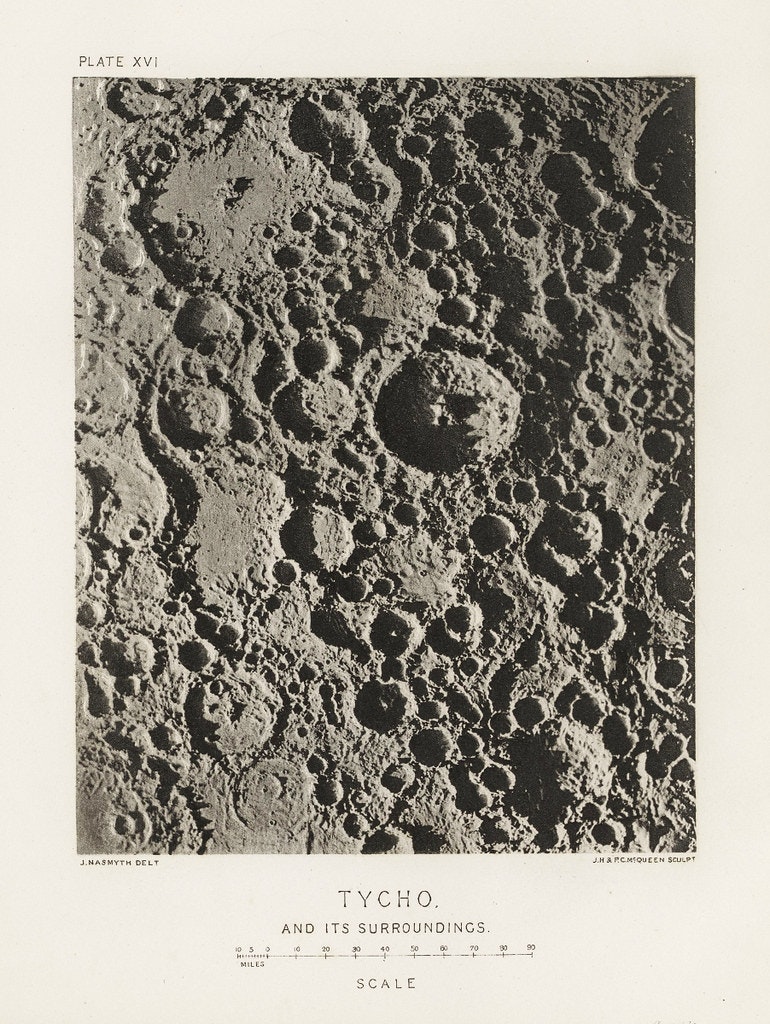
- Tycho Crater
-
- Wargentin Crater
-
- Triesnecker Crater
-
- Terrestrial & Lunar Volcanoes Compared
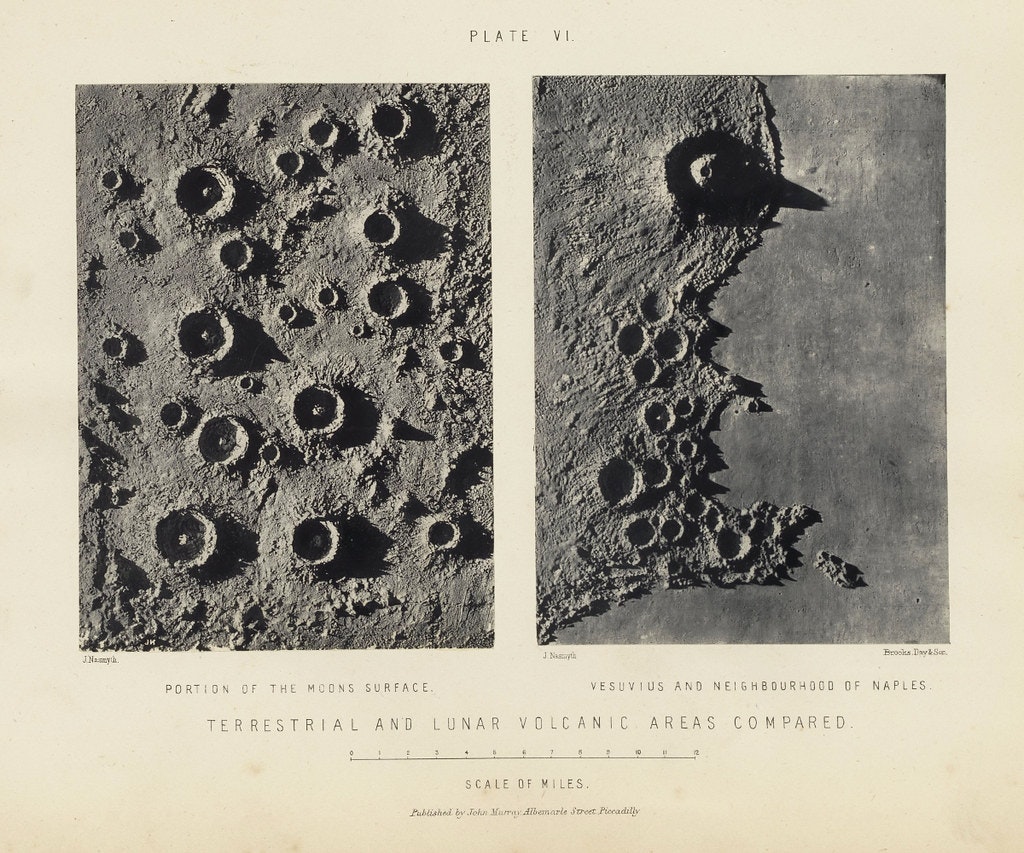
-
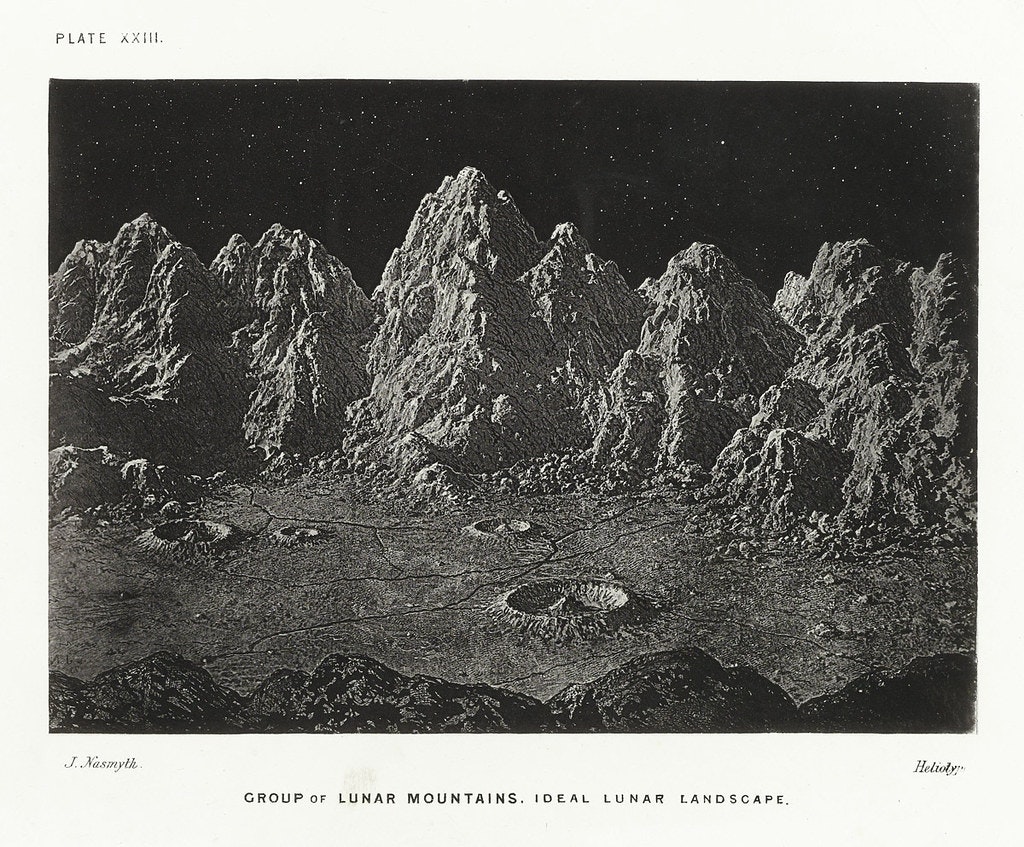
- Lunar Mountains
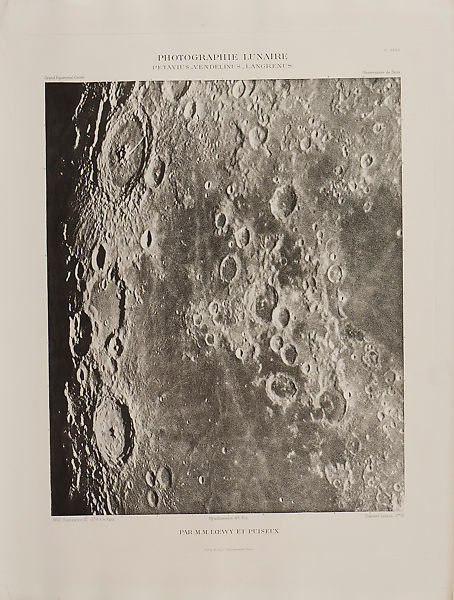
The second group dates to the 1890s and early 1900s, produced during the Paris Observatory’s 14-year photographic survey of the lunar surface. Of the photos below, one appears to be a souvenir; the rest are from a book published in 1908, Photographic Atlas of the Moon.
-
- Atlas of the Moon
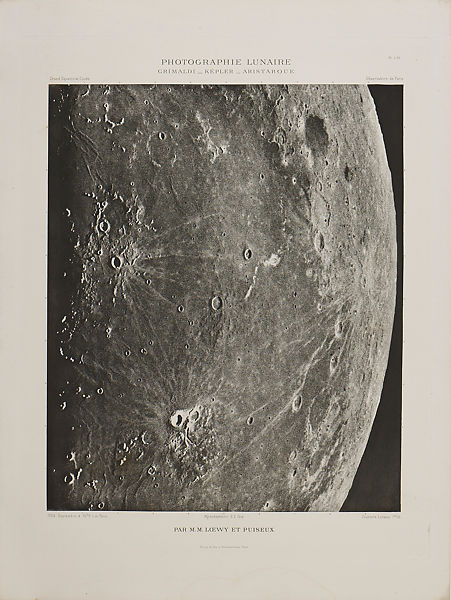
-
- Atlas of the Moon
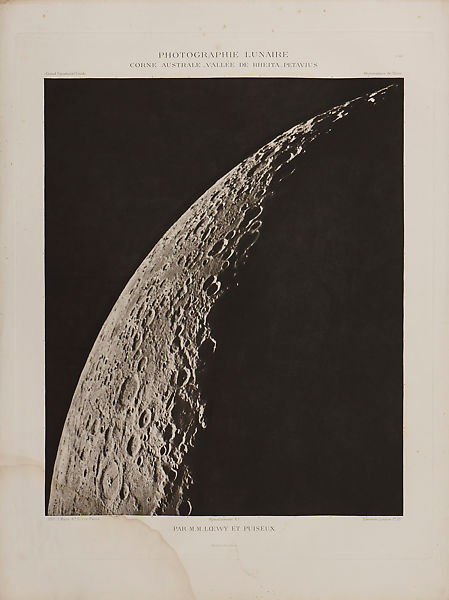
-
- Atlas of the Moon
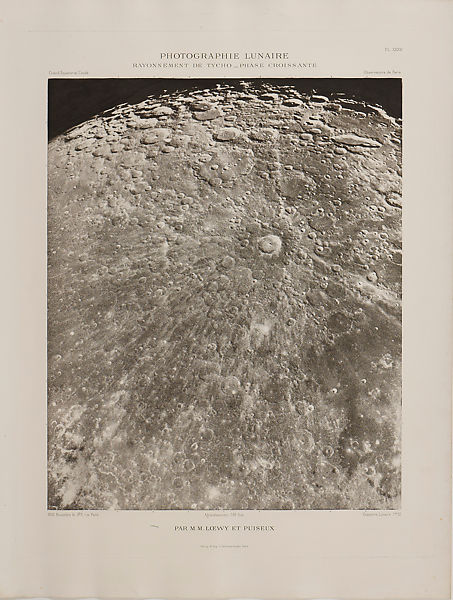
-
- Atlas of the Moon
-
- Souvenir
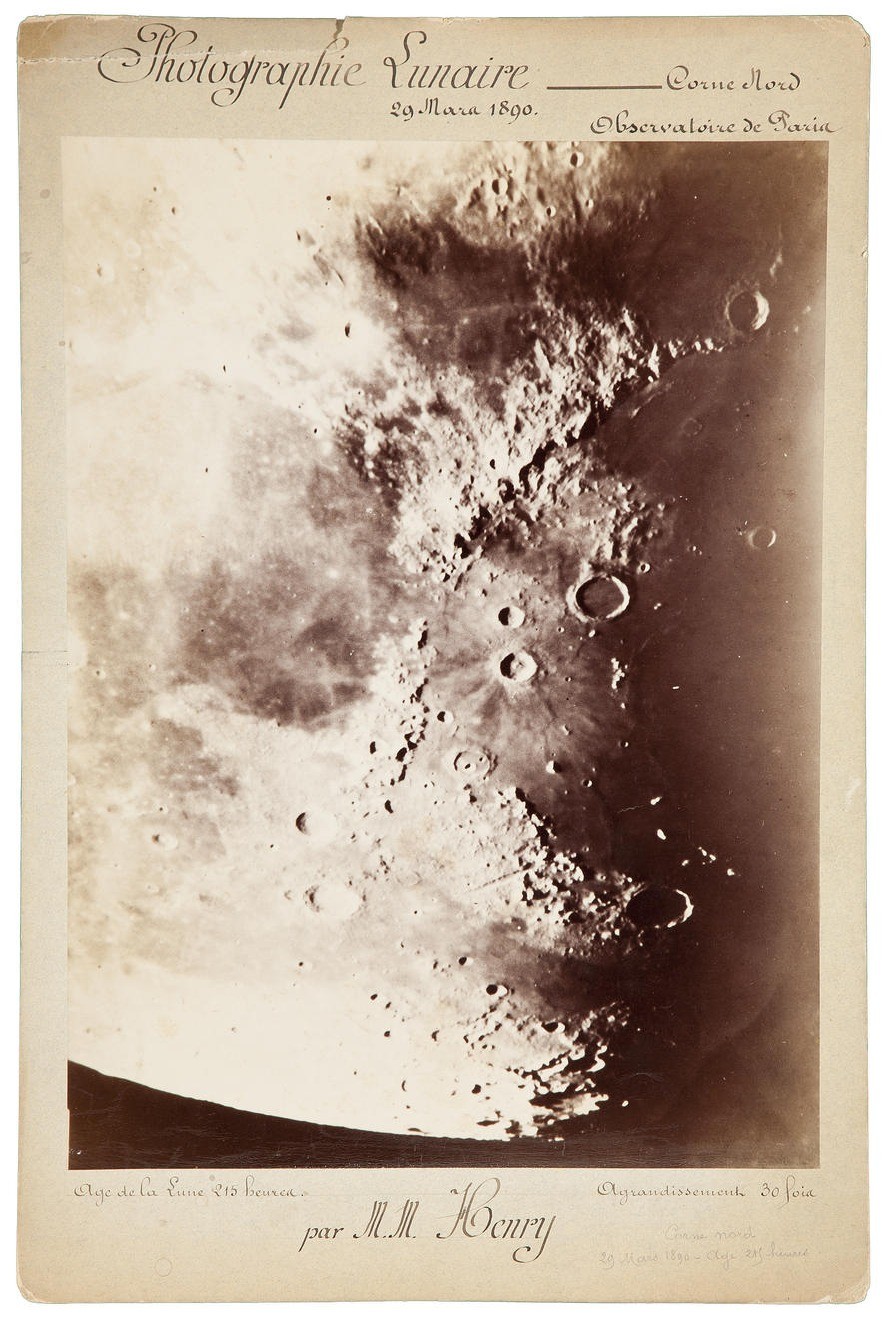
Writing prompt: in a short (1¶) response, reflect on what these image collections suggest about the role of photography in nineteenth-century astronomy. Some questions you might consider: Which set of images of the moon do you find more impressive? What do you find visually engaging? How do the Paris Observatory images differ from Nasmyth and Carpenter’s earlier work?
These images suggest that photography was greatly important to astronomy, especially when studying planets and moons. It allowed scientists to examine details up close and capture different phases or sections depending on which side of the moon was visible. Photography also made it possible to share these images with the general public, which must have been fascinating for people who weren’t familiar with astronomy. Personally, I find the Lunar Mountains the most impressive—it reminds me of the Grand Teton in Wyoming. It’s the most visually engaging to me because it gives a first-person perspective, as if you were standing on the moon yourself, looking up at the lunar mountains and the stars above. I can imagine it was even more captivating when it was first taken, helping people imagine a future where humans might one day see that same view with their own eyes as we explore space and live on other planets. This contrasts with the rest of the images, where Nasmyth and Carpenter’s work focuses more on top-down views of craters, while the Paris Observatory images highlight the broader lunar landscapes.
These images suggest that photography played an extremely large part in astronomy in the 19th century. I assume that being able to have visuals (to use as evidence) has become important during this time. The first collection of photos is much more interesting than the second set. They are far more impressive in terms of clarity and precision, especially since they were taken about 2-3 decades earlier than the others. I find the detail visually engaging. Being able to see the differences between the images as well as the frequency is impressive. The second section of photos focuses on a much larger area of the moons, while the first one was much more centralized. These could have been used to juxtapose the closer images or to help astronomers understand the moons as a whole rather than just by their craters.
I find the first set of images more impressive and more visually engaging because of the difference in detail given the time period. The level of detail it takes to identify craters on the moon in the 1870s impressed me more than seeing general images of the moon’s surface in the early 1900s. Since the set of images from the Paris Observatory come around 20 years after the set from Nasmyth and Carpenter, I expected more detailed or close-up images of the moon. These images suggest that 19th century astronomy was heavily reliant on photography since there wasn’t any other way to collect evidence from space.
In nineteenth-centry astronomy, photography must have played a far more critical and informative role than other forms of media could at the time. With much more limited technology and travel to the moon not yet possible, photography such as these photos were the most detailed and intimate explorations of the moon possible for the time. As a result, their role in scientific advancement and study was an irreplacable artifact in astronomy of information. I find the first set of images not only more impressive but more visually engaging but two reasons. One, the photographs have much more resolution and depict the cratered nature of the moon much more clearly than the second set does, as it seems to focus on the more holistic nature of the celestial body. Second, the photos were older, so obtaining such clear photography of the moon’s surface earlier in history is also impressive. The Paris Observatory’s pictures differ from the earlier photos as they show a greater surface area of the moon and depict the shape much more of the planet rather than the intricacy of the surface texture. They depict the spherical nature of the body more than focusing on the cratered surface.
Photography becoming an important scientific tool in the nineteenth century is shown through these pictures. In my opinion, the images by Nasmyth and Carpenter appear more like artistic interpretation as the moon’s surface looks very textured and somewhat dramatic. On the other hand the Paris Observatory photos look more scientific. They look as if they were taken to actually record the true look rather than create a visual impact. I think that the Observatory pictures are more impressive because they show the moon with greater accuracy. The change from somewhat artistic interpretation to direct observation is clear when looking at the two collections together.
At first look, I was more impressed by the John Naysmith and James Carpenter photos taken from the 1860s-1870s. The closeness they depict shows details that had been relatively unimaginable to me before. These images almost make you feel as if you are on the moon, experiencing it first hand. The title of the book in which the images were published is also very fitting—these images make viewers consider the moon as its own world as sorts. However, for the time these images were taken, I wonder if the second set of photos was the most remarkable. This set of photos, more zoomed out, disrupt any lingering notions of geocentrism, showing the Earth’s shadow on the moon. Seeing these images reminded me of the power of astronomy to help us think outside of our world, and reimagine ourselves on its exterior.
Photography played a pivotal role in fostering accessibility and a sense of exploration during the 19th century when space remained unreachable to many. This collection of photos not only deepened humanity’s limited understanding of the moon at the time but it also layed groundwork for modern lunar geology.
In this series, I am most impressed by the first group of photos from 1860s-1870s. The 1860s images are strikingly detailed, especially given the technological constraints of the time. Their closeup views of the craters also create an immersive sense of standing on the lunar surface, successfully laying a foundation full of details for public fascination with space as well as sparking wonder amongst the public. The later photos from the 1890s, on the other hand, capture a broader survey of the moon, which in my opinion also look nice but lack the level of details as well as intimate impact of the first group of photos. Overall, both sets of photos nevertheless, I find the detail visually engaging as well as impressive.
From my perspective, these two sets of images indicates the shift of astronomical interest in the Moon from a scientific pursuit of exploration to a more artistic and interpretive interest. In the first set of pictures, photography served as a tool of discovery and documentation. The images captured by Nasmyth and Carpenter in the 1860s and 1870s are primarily focused on the craters on Moon’s surface. Like a child seeing something new for the first time, his curiosity drives him to explore every detail of it. Yet after this phase of exploration, the perspective slowly shifts, and photography becomes more expressive and artistic. The second set of photographs from the Paris Observatory during the 1890s to the early 1900s, though still rooted in observation, is closer to artistic presentation. They focus on the overall state and atmosphere of the Moon rather than its surface structures. This change demonstrates photography’s expanding role: from a scientific instrument for discovery to a medium that also conveys the artistic dimension of celestial observation.
The earlier images by Nasmith and Carpenter are really good for their effort to simulate lunar landscapes, but they often appear more artistic and interpretive, since they were based on detailed models rather than direct photographs. In contrast, the Paris Observatory images from the early 1900s show a really impressive advancement due to better technology leading to more realism and precision. I find the early photographs more impressive because they feel like we are looking directly at the moon, like we are present. The lunar mountains are impressive, you wouldn’t imagine seeing mountains on the moon, since it just looks smooth. But being able to see similar structures to the ones on earth, is pretty cool. Its also crazy how technological progress shifted lunar observation from artistic imagination and illustrations to a more scientific documentation.
I can clearly see how photography developed as a means of comprehending space when I compare the two sets of moon photos. Naysmith and Carpenter’s initial photographs seem less like accurate documentation and more like interpretations. The images appear more creative than scientific, despite the obvious effort they put into depicting what the Moon would look like. A few decades later, the images from the Paris Observatory feel completely different. They appear to be more intent on portraying the Moon in its truest form and are clearer and more detailed. These pictures demonstrate how photography had developed into a significant aspect of astronomy by that time, enabling more precise surface studies. Since the Paris Observatory shots seem more authentic and more in line with the type of space photography we are accustomed to seeing these days, I find them to be more captivating. Nevertheless, I like how both sets capture the enthusiasm people felt for discovering and recording someplace so remote.
Looking at both groups of photos, it’s evident that photography played a larger part in astronomy than other forms of media at the time. The first group of pictures from Naysmith and Carpenter bring out a deep sense of wonder from the viewer, allowing them the ability to drag their eyes across the landscape and analyze each individual crater. I was especially drawn to the picture of the Lunar Mountains because it lets us imagine seeing them from a first person perspective as if I’m on the surface of the moon. This was probably a profound picture in the 19th century because it could educate the masses on the real scale of these mountains on the moon. The second group of pictures are also impressive but the focus seems to have shifted to displaying how vast the surface of the moon is. Regardless, both groups of photos bring out an awe for the moon.
The two collections show how quickly photography advanced in the 19th century and how it changed the way people studied the Moon. The earlier images by Nasmyth and Carpenter look more like artistic interpretations; they have a textured, sculptural quality that captures the Moon’s surface dramatically, but they don’t feel entirely real. The later Paris Observatory photographs, by contrast, seem far more precise and scientific. You can see sharper craters, more realistic lighting, and a stronger sense of the Moon as an actual place rather than an imagined landscape.
I personally find the Paris Observatory images more impressive because they show how technology brought astronomy closer to direct observation. Still, there’s something beautiful about the older photos; they reflect a time when science and art were closely connected in the pursuit of understanding space.
As many peers have already mentioned, I agree that the role of photography was significant during the nineteenth century, especially since humans could not see outer space things in person. Among the pictures above, I find the four Atlas of the Moon photos from the Paris Observatory to be the most impressive. Although John Naysmith’s and James Carpenter’s photos show close-ups of the moon’s surface in detail, I appreciate the encompassing view of the moon more. Also, I think it is more impressive to see the overall shape and varying textures of the moon in multiple angles, especially with the dark side. Though the close-ups show greater detail, I think the far photos may better help with analyzing the varying two sides of the moon, shadows, and locating geographical points. Nonetheless, the close-ups photos are very interesting regarding the details of the mountains and craters, with their distinct shapes, numbers, sizes, and depths.
The first set of images seem to be much more up close, focusing much more on the actual geography of the moon and the shape of the surface, whereas the second set of images are form a farther distance, capturing more of the surface area and curvature of the moon. I personally find the first set of images to be more impressive as they are much more detailed and show the actual shapes, rock formations, and geography of the moon rather than a wider view which shows less impressive details. In terms of photography, it played a pivotal role in modern humans understanding the cosmos. Until photography of the stars and the moon was widely accessible, people had no image in their head of what the moon could look like up close, or even what stars and different planets looked like. It makes a huge difference for people to finally understand what is out there and actually “put a face to the name.” It allowed people to feel more connected and knowledgable to the unknown which is extremely important for the progression of humanity.
I think that photography was an important step, especially for those wanting to learn, but were unable to access telescopes. It allowed the average person to observe, as it was published in books like The Atlas. I personally found the first set of images to be more interesting. They show much more detail of the moon and contain a photo of the lunar mountains which I find especially interesting. I love how much there is to engage with in this set of photographs. The Paris observatory images different in that they are much more so whole pictures of the moon rather than crater sites or mountains. The second set of photos gives more of an overall view of the moon rather than being specific.
* I believe photography definitely played a huge role in nineteenth-century astronomy, considering the lack of technology people had access to during those times. Photography definitely helped the average person get a much better idea of astronomy in the 19th century than now. Today, anyone can search for something on their phone and obtain information within seconds, but in the 19th century, if someone was publishing a photo, it meant that it was something extremely legitimate and important. Ironically, I find the older set of images more impressive, but the more thought I give to it, I think about how the zoomed-out images must’ve been taken(considering the technology back then), and that is also extremely impressive. I find the different textures and detail quite engaging, since it’s like something I’ve never seen or experienced before, and the Group of Lunar Mountains photo specifically, because it just didn’t even look real. The images from the 1860s and 1870s(by Nasmyth and Carpenter) seem to be much more zoomed in and close-ups of the ground(more detailed), whereas the images from the 1890s and 1900s(by Paris Observatory) seem more sort of a birds-eye view, showing a much more zoomed-out aerial view of the moon. This is interesting to me because I figured it would be the other way around. The close-up images really provide a much better idea of the textures, geography, natural formations, and just an overall much more detailed gist of the moon. I believe a combination of these images would’ve been an extremely significant feat in the astronomy industry in the nineteenth century.
Looking at two sets of pictures of the Moon, I notice the significant transformation starting from the Nasmyth and Carpenter’s 1870s photos, which were based on artistic reconstructions rather than direct observation. This reflected the creators’ intellectual curiosity even without advanced equipments. I also think their simulated views of the moon appeared as if they came from a science fiction movie. However, taken into historical and scientific context, the photos served a more important role by supporting Nasmyth’s claim that the pockmarked lunar surface was the result of volcanic activity. The Paris Observatory’s photographs, on the other hand, show how quickly technology advanced and how photography became a scientific tool rather than just a visual aid. One of the reasons why I prefer the later version more is because they captured the moon’s real surface more clearly. I also like how we can see crater rays on the Atlas of the Moon pictures, which are aesthetically pleasing. Again, together, these pictures show how photography evolved from artistic interpretation to scientific precision, improving the way scientists study and make astronomical findings.
The nineteenth century was the first time astronomers were able to capture pictures of celestial objects such as the moon. Before then, they could only see things in space with telescopes and had no way to capture the way things looked at a certain moment in time. Being able to have photographs allowed astronomers to study objects in space such as the moon in finer detail than before. Personally I think the Paris observatory images are more impressive because of how they capture the moon against the vast darkness of space while also seeing features of the moon. In both sets of photographs, being able to see that much detail of the moon at that point in time was revolutionary for astronomers studying space and for civilians who didn’t have access to telescopes.
From looking at this collection of images, it’s noticeable that there was a major upgrade in technology during this time. The technical qualities showed clear improvements in only a few decades, from the 1st set (Naysmith and Carpenter) to the 2nd set (Paris Observatory), with clearer, wider and brighter image qualities in the later set. This likely mirrors the rapid improvements in technology and science around that time during the Industrial Revolution. While the 2nd set is better in terms of quality, and feels more “scientific”, it’s actually less compelling for me, since it’s taken in a way that is familiar to me: many photos of the moon today have a similar look and feel – turning the moon more into a mere object to be clinically observed. Thus, the 1st set is actually more fascinating, since the photos feel different and feel more fantastical and unusual. The most outstanding photo from the 1st set is the one of the Lunar Mountain, offering a perspective that is rarely seen. It looks like a painting or portrait, and invites the viewer into the scene. It makes you feel like an explorer who has discovered an amazing new landscape – elements that are a bit familiar to Earth, yet strangely alien. This photo captures the spirit of adventure and discovery the most.
I find the images taken by Naysmith and Carpenter to be more impressive, the level of detail and the quality of the images must have been groundbreaking for the time these pictures were taken. They could even be consider pictures taken nowadays. These images allow you to discern the site of impact of the asteroid, how it broke into pieces from impact and later fell again on the moon creating further craters. The level of detail is amazing. They even include a scale to be able to understand the size of these craters and how they compare to others. The second group of pictures is also incredibly impressive, however they provide a bigger picture of the surface of the moon and the moon as a whole. Both sets of images are impressive for the time they were taken, and both complement each other perfectly, providing a wider view and a more detailed view of the moon. Overall, helping the people of the time understand how the moon looked more clearly.
These image collections reveal how photography transformed nineteenth-century astronomy from imaginative reconstruction to empirical observation. Nasmyth and Carpenter’s 1870s engravings, though striking in their sculptural detail and artistry, reflect a hybrid of scientific curiosity and artistic interpretation, crafted to visualize what telescopes could not yet capture clearly. In contrast, the Paris Observatory’s 1908 Photographic Atlas of the Moon demonstrates photography’s growing precision and authority as a scientific tool. The later images, with their tonal gradients and realistic textures, evoke the Moon’s physicality far more convincingly, replacing artistry with evidence. I find the second set more impressive for its quiet power, the sense that one is truly looking at the Moon itself, rather than an imagined model of it.
These photos suggest that photography played a bug part in discovering more about the moon as the technology developed. In the first group of photos, you can see that the technology is only good enough to analyze craters or only small clusters of them. This is definitley a good start, but comparing these to the second group of photos they seem to look at a broader view of the moon showing more biomes of the celestial body than what the first group had to show. The second set also looks into the affect of the sunlight on the moon showing the line that divides the dark side and the light side and the shading really shows the roundness of the moon.
The two collections seem to reveal the growing precision and ambition of nineteenth-century astronomical photography, as well as a shift in astronomical interest from art and interpretation to one of science. Nasmyth and Carpenter’s images from the 1860s and 1870s, although they appear more detailed, I believe are either drawings or clay models, as I find it hard to believe that someone was able to take a real picture of mountains on the moon at that time period. This reflects photography’s early use as an illustrative and interpretive tool rather than a purely documentary one. These craters and mountains appear very rugged, emphasizing the moon’s geology that was imagined by the human hands of the time. In contrast, the Paris Observatory’s photographs from the 1890s-1900s seem to be more realistic, born from seemingly long exposure photography. The moon’s curvature, light, and texture seem to truly convey the distance of the object, which is impossible to deduce from the earlier images. The later images again emphasize the transition from artistic photography to observation, marking a key shift in how science is represented in astronomy. I find the observatory’s images more impressive as images, not due to the artistry, but for the pure fact that they inspire the capture of the moon as it truly is, rather than visions.
These image collections suggest that photography was quintessential to astronomy as cameras provide a permanent record. I personally find the first images more impressive because if these were among the first images of the moon’s surface with a scale, the insight it would provide would be substantial. Being able to see and measure the individual asteroids that struck the surface could have been a new breakthrough in astronomy too. I believe the difference between the two image collections is that the first were taken for scientific purposes while the second were taken for artistic purposes. I find Naysmith’s and Carpenter’s image collection far more visually engaging, especially the photo of the Tycho Crater.
Looking at these two collections, I find the Nasmyth and Carpenter images more visually engaging because of their dramatic close-up perspective on specific lunar terrain. The key difference I notice is scale: their work zooms in on individual craters and mountain formations with intimate detail, while the Paris Observatory photographs pull back to show the curved lunar horizon and broader surface expanses. This shift reveals photography’s evolving role in nineteenth-century astronomy. The earlier images render space for imagination and interpretation, treating lunar features almost like portrait subjects with emphasized texture and shadow that make the moon feel tangible and explorable. The Paris Observatory collection marks a transition toward systematic documentation, prioritizing comprehensive survey over intimate encounter.
The two sets of lunar photographs show how photography transformed nineteenth-century astronomy from artistic interpretation to scientific documentation. Nasmyth and Carpenter’s 1870s images, though striking, were modeled from plaster casts, blending imagination and observation. They reflect an era still reliant on human reconstruction to visualize celestial bodies. By contrast, the Paris Observatory’s Photographic Atlas of the Moon captures the Moon directly through the telescope, revealing fine textures and lighting that convey realism and scale. The later images feel more objective and precise, showing photography’s growing power to replace sketches and models with empirical evidence, turning the Moon from a poetic object into a measurable world.
In the 1800s, photography helped people see space in a whole new way. Nasmith and Carpenter’s pictures of the moon look more like drawings or models, they tried to show what the craters and mountains might look like up close. The later Atlas of the Moon photos are clearer and feel more real, showing the moon as it actually looks through a telescope. I think the Atlas images are more impressive because they make the moon seem alive and detailed, while the older ones are more artistic. The Paris Observatory photos are sharper and more scientific, while Nasmith and Carpenter’s work feels more like an artist’s interpretation.
I did some additional research on the photographs and discovered that Naysmith and Carpenter’s 1860s–70s images, although detailed, were actually photographs of plaster models of the moon rather than the moon itself. It was an attempt to simulate telescopic views that cameras of their time couldn’t capture directly. I thought it was a really great way to blend both art and science. By contrast, the Paris Observatory’s 1890s–1900s photographs mark a major shift toward precision and realism, made possible by improved telescopic and photographic technology. Although they seem to be less detailed, they depict a more realistic image of the moon’s surface. Personally, I find the Paris Observatory images more impressive for their scientific accuracy, while the earlier ones remain visually engaging for their imaginative effort to visualize the unreachable.
The evolution of photography revolutionized Astronomy and enabled people to have a stronger visual idea of the moon and examine its intricacies up close. Out of the two sets of collections, I find the former to be more engaging for two reasons. To start, its quality of images for its time is more impressive than the latter where technology has significantly developed then. Secondly, the first collection of images offers a closer look at the surface of the moon whereas the second provides a look of the broader moon.